
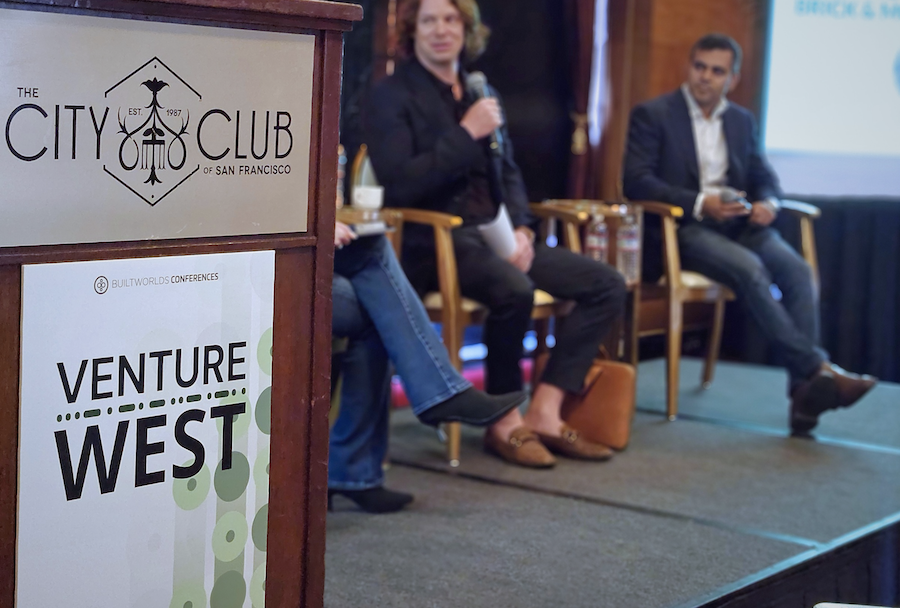
At Venture West 2026, there was a lot to talk about—shifting standards and expectations, the increasingly nuanced due diligence process, AI’s growing impact, the industry’s evolving opportunities and challenges, and the list goes on—which is no surprise, considering the explosive growth the AEC industry’s venture sector has recently experienced.
In 2025, venture activity in the built environment saw four consecutive quarters with more than 150 deals and $4+ billion in inflows. It’s the first time in our industry’s history that investors have put up those kinds of numbers. But as venture activity increases alongside the number of AEC-specific tech solution providers, the definition of success in the space has narrowed. Contractors are demanding practical use cases and clear value.
How to effectively navigate our industry’s complex landscape and achieve that success was a central focus of this year’s Venture West conference. And while many insights and lessons were shared—too many to fit into a single article—we’ve curated some of the top takeaways for those who were unable to attend.
Due Diligence Beyond the Financials
One of the exciting things about venture capital in the built environment is that it’s a relatively new field for heavy investing activity. While it’s resulted in a number of specialized investors popping up in the industry, it’s also brought a number of generalists, as well. One lesson that’s been hard learned by this influx of VCs is that effective due diligence in the built environment goes beyond financial metrics and forecasts.
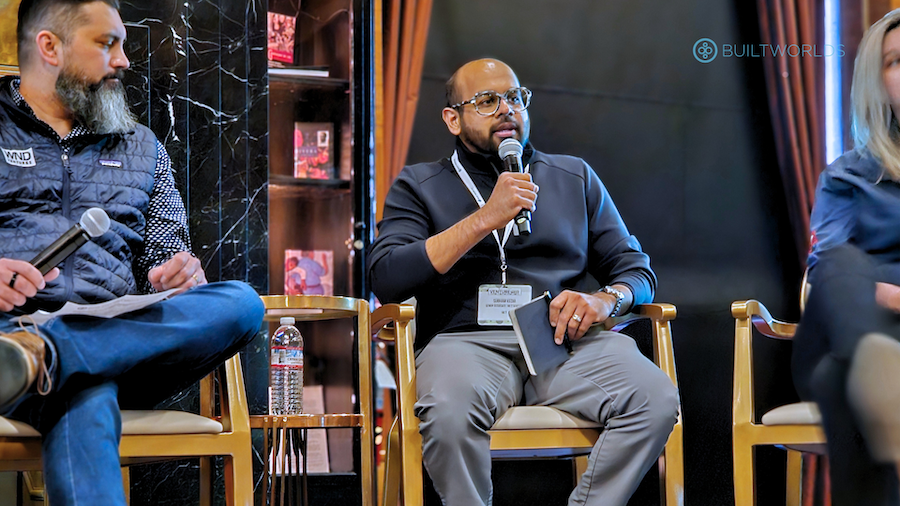
During the event, this was a subject touched on a number of times, with the advice consistently focusing on the importance of field-ready solutions. In the “Funding the Physical Future: Investing in Built-World Tech That Has to Work in the Field” panel, representatives from WND Ventures, Suffolk Technologies, Hilti Ventures, Navitas Capital, and AEC Angels broke down their diligence requirements by stages. For seed-stage companies, the focus was on technology viability and field adoption; and for Series-A and -B companies, they suggested a greater attention on the scalability, manufacturing costs, and customer success infrastructure (assuming the viability and adoption angles were already satisfied).
Qualifying these requirements, particularly for the earlier stage startups, our panelists agreed, requires field testing, genuine feedback from end users, and the ability to rapidly iterate based on that feedback while providing clear ROI metrics (like productivity improvements and cost savings).
One speaker said bluntly that the business model had recently, and not just in construction but throughout the economy, “gotten kind of clobbered.”
Engaging the Experts
Acknowledging a certain (though not necessarily universal) deficit of intimate industry understanding and knowledge, a common thread throughout this year’s Venture West was that founder and ultimately startup success is directly correlated to their ability to access and furthermore engage AEC experts. There was a specific emphasis on the importance of working closely with corporate partners to understand unmet needs and pain points in the industry, which, it was said, can help improve the balance between strategic and financial objectives.
Sustainability as a Business Opportunity
Historically, sustainability hasn’t been a business imperative in the built environment. It’s been more of an environmental aspiration—which while generally acknowledged as a good thing, was rarely considered a business priority. That seems to be changing.
Throughout Venture West, investors, founders and contractors alike acknowledged the increasing impact of macroeconomic conditions, policy, regulation, and the budding carbon economy. The confluence of a number of factors has made sustainability a genuine opportunity.
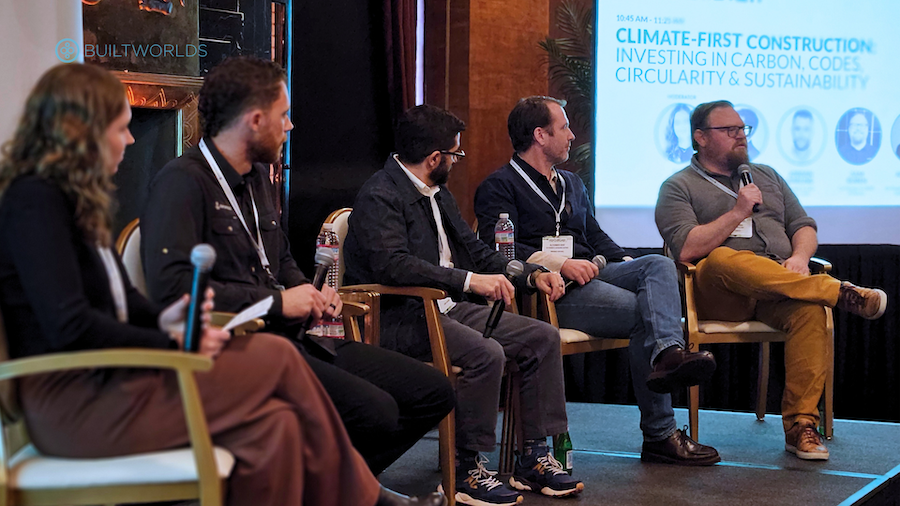
In the last three months, for instance, crude oil prices have jumped 70% and Brent crude prices have similarly increased 71%, putting them both near Great Recession and peak pandemic levels. With an armed conflict happening in the Middle East, including an acute drop in oil passing through the Strait of Hormuz, those prices aren’t expected to come down any time soon. Couple that with Europe’s environmentally-forward policies and a growing carbon economy, particularly prominent in Asia—with Venture West speakers specifically mentioning Singapore’s Carbon Tax and Japan’s enthusiasm for nature-related financial disclosures—and built environment stakeholders all around the globe are gaining new incentive to factor sustainability into their business decisions.
The New Look of “Scalable AI”
There has been no lack of conversation around the adoption of AI in the built environment recently, but what’s being discussed is changing. While the initial interest was broad, with AI being assumed as a catchall problem solver for AEC, understanding of its usefulness has narrowed. Scalable AI now requires moving beyond “siloed data.” Firms are focusing on connecting structured data (dashboards/schedules) with unstructured data (site photos/notes) to create comprehensive knowledge graphs.
Throughout Venture West, investors, founders and contractors alike acknowledged the increasing impact of macroeconomic conditions, policy, regulation, and the budding carbon economy.
The “Value Proposition” Bar Is Rising for SaaS Companies
A final point of conversation that stood out at this year’s Venture West was the shifting attitude towards SaaS companies. One speaker said bluntly that the business model had recently, and not just in construction but throughout the economy, “gotten kind of clobbered.”
This is seemingly for two reasons: the influx of both AI-native and AI-enabled tech solutions; and, specific to AEC, the increased focus on contractors bringing tech expertise in house. These factors haven’t necessarily negated the value of SaaS, our speakers largely agreed, but it is challenging them to better define their value.
Discussion
Be the first to leave a comment.
You must be a member of the BuiltWorlds community to join the discussion.