
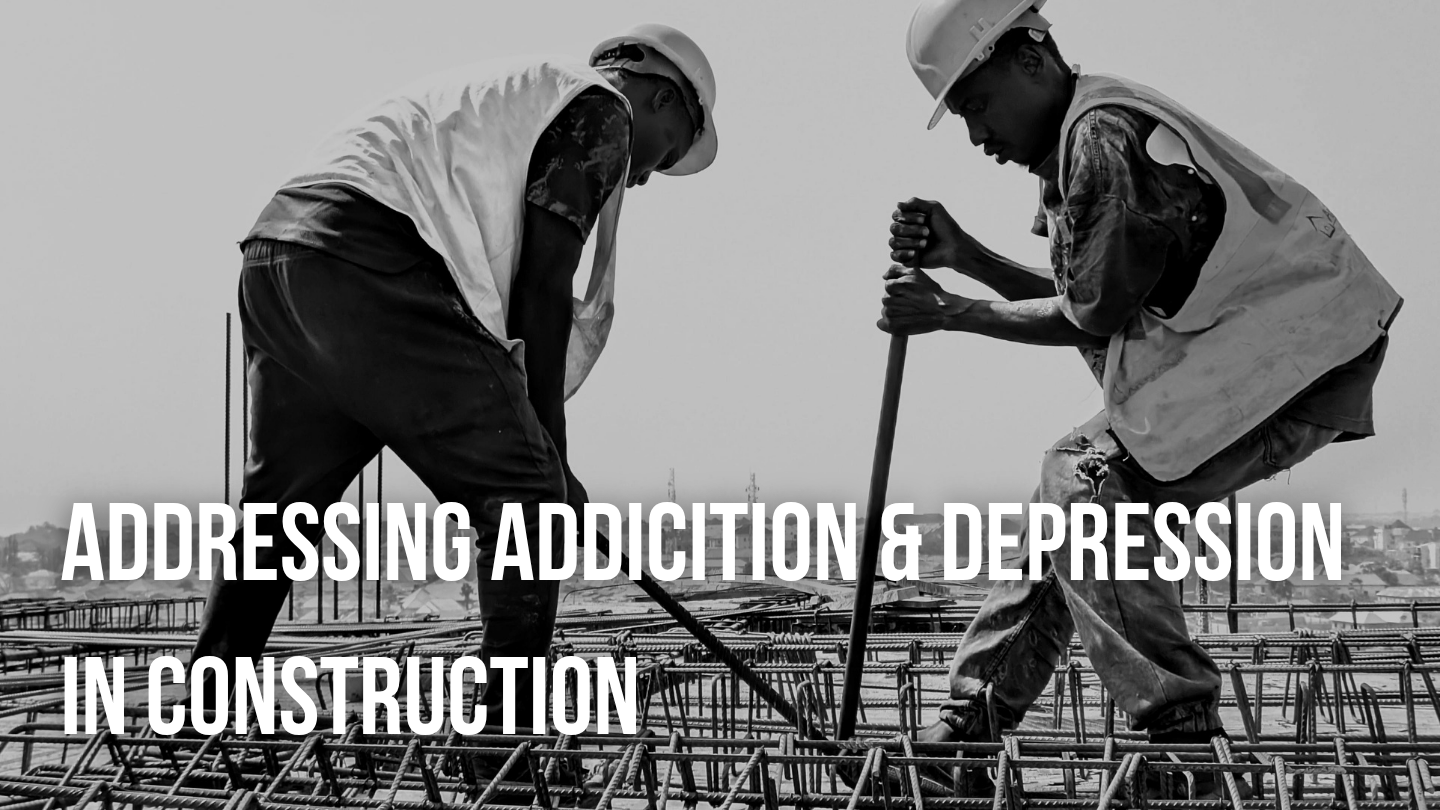
It is no secret that construction is a dangerous profession. But while the work’s physical threats may seem obvious, the mental ones are decidedly less so. Still, they are serious, present and widespread all the same.
 A construction worker is reportedly three times more likely to die from a drug overdose than the average worker, and about four times as likely to commit suicide. In fact, suicides in construction alone dwarf the number of fatal jobsite injuries. It’s a problem that’s been plaguing our industry for years, and one Amber Trueblood and Jessica Bunting from CPWR’s The Center for Construction Research and Training are uniquely fit to speak on.
In an effort to better understand the problem as well as provide contractors with some help in identifying and addressing some of the issues at the root of addiction and depression, we recently sat down with both Amber and Jessica, who generously shared their expertise and experience. See the full interview below.
It’s easy to imagine why injuries are so common in construction (it’s inherently dangerous work) but why does our industry struggle so much with overdose and suicide?
There are a number of risk factors for opioid overdose and suicide in the construction industry. In the article Risk and Causative Factors of Psychological Harm Among Construction Workers: A Systematic Review, the authors analyzed 68 studies published between 1991 and 2022 to understand the psychological risks facing construction workers and the factors that contribute to stress, anxiety, depression, and other mental health challenges. The authors argue that, while physical dangers on job sites are widely recognized, psychological hazards have been significantly overlooked across the industry.
Their review identifies several major contributors to psychological harm:
- Job insecurity, due to the project based nature of construction work
- Long and irregular working hours, often leading to poor work life balance
- High job demands and time pressure, which elevate stress levels
- Workplace bullying and poor supervisor support
- Substance use, especially heavy alcohol consumption, which is more prevalent in construction than in most other industries
These factors of the work lead to chronic stress and perpetuate “a cycle of stress and mental health problems.” The article also highlights that mental health stigma remains a major barrier to help seeking. Many workers perceive stress, emotional difficulty, or burnout as signs of personal weakness rather than legitimate health concerns.
In addition, the high rate of injury and chronic pain leads to opioids often being prescribed by doctors. Construction workers can then become physically dependent on opioids in less than one week.
Has this long been a problem? If so, how has it gone unaddressed for so long?
Unfortunately, we do not have historical data to determine the answer to this question. It seems likely these industry risks to psychological safety have been impacting the mental health of construction workers for decades, but industry-specific data related to overdose deaths and suicides only became available in more recent years. A 2018 Massachusetts Department of Public health report found that construction had significantly higher than average rates of opioid-related overdose deaths as compared to all workers. That same year, the CDC published a Morbidity and Mortality Weekly Report looking at suicide rates across 17 U.S. states. The report indicated that Construction and Extraction had the highest male suicide rate of any major occupational group. Before this data was published, there was a lack of awareness of how pervasive these issues were, but now that the industry is aware of and tracking suicides and overdoses more closely, prevention has become a top priority for many.
What are some warning signs of addiction and/or depression that superintendents, managers and owners should be on the look out for to help address issues before they spiral into something worse?
There are common warning signs that may apply to anyone struggling with mental health issues or suicidal ideation, but it is important to keep in mind that everyone is different. Because of this, warning signs will look different for different people and the most important thing to pay attention to is whether a significant change has occurred in the person’s life, relationships, behavior, or demeanor.
- What is happening in the individual’s life? Relationship issues, loss of loved ones, financial difficulties, illnesses, or other major life changes can be risk factors and also act as warning signs.
- What are they saying? While some individuals may not say anything at all, others might express feeling like a burden, feeling trapped, feeling hopeless, or even stating directly that they want to die.
- Finally, what are they doing? Changes in behavior such as irritability, recklessness, increased conflict with coworkers, work-related performance or attendance issues, misuse of drugs or alcohol, or extreme mood swings can indicate that someone is struggling. Because of this, performance issues should be addressed with care and concern before disciplinary action.
It seems likely these industry risks to psychological safety have been impacting the mental health of construction workers for decades, but industry-specific data related to overdose deaths and suicides only became available in more recent years.
To that end, what role do you believe those same leaders can or even should play in helping their employees address those types of issues?
Most people are not equipped to talk someone down from a crisis alone, and should not be expected to fulfill the role of a mental health professional or healthcare provider. However, management, supervisors, and other leaders can and should take a proactive role in ensuring the mental wellbeing of their employees. Having a crisis response plan that includes mental health crises is critical so that leaders know how to intervene and where to seek additional help for anyone struggling. Calling 988 is always an option, but knowing what local resources are available is even better.
In addition to responding and supporting workers through a crisis, leadership is uniquely positioned to change the workplace to better prevent suicides and overdoses. Many of the construction-related risk factors discussed above can be addressed by employers championing mental health in the workplace through:
- Incorporating prevention at the corporate policy level
- Instituting paid leave and/or flexible scheduling policies
- Becoming a recovery-friendly workplace
- Planning work to reduce layoffs
- Providing good medical insurance and employee assistance programs
- Cultivating a community and a culture of care and respect
- Incorporating mental health into an overall safety and health program
- Leading and destigmatizing by example and by having conversations around mental health
- Conducting mental health awareness training
- Setting reasonable expectations
- Providing leadership training and support to better equip leaders with people management skills
Management, supervisors, and other leaders can and should take a proactive role in ensuring the mental wellbeing of their employees.
What are the most impactful actions companies can take to create an environment that minimizes the risk of addiction and/or depression?
Focus on both injury reduction and psychological safety. Reducing exposure to traditional work-related hazards like musculoskeletal disorders, falls, and heat-related illness is critical, but so is incorporating mental wellness at the highest levels.
A CPWR-funded study on the Impact of employment laws on construction worker suicide showed that policy level changes can have a big impact:
- Female construction workers had significantly lower suicide rates in states with family and paid leave laws, and male workers also benefited.
- States with laws restricting opioid prescribing practices saw lower suicide rates among male construction workers.
- Substance use was more common as a contributing factor to suicide among construction workers than in other professions.
Employers don’t have to wait for policy change to happen at the government level. They have the power to implement best-in-class policies that reduce worker stress and increase worker wellbeing.


Discussion
Be the first to leave a comment.
You must be a member of the BuiltWorlds community to join the discussion.