
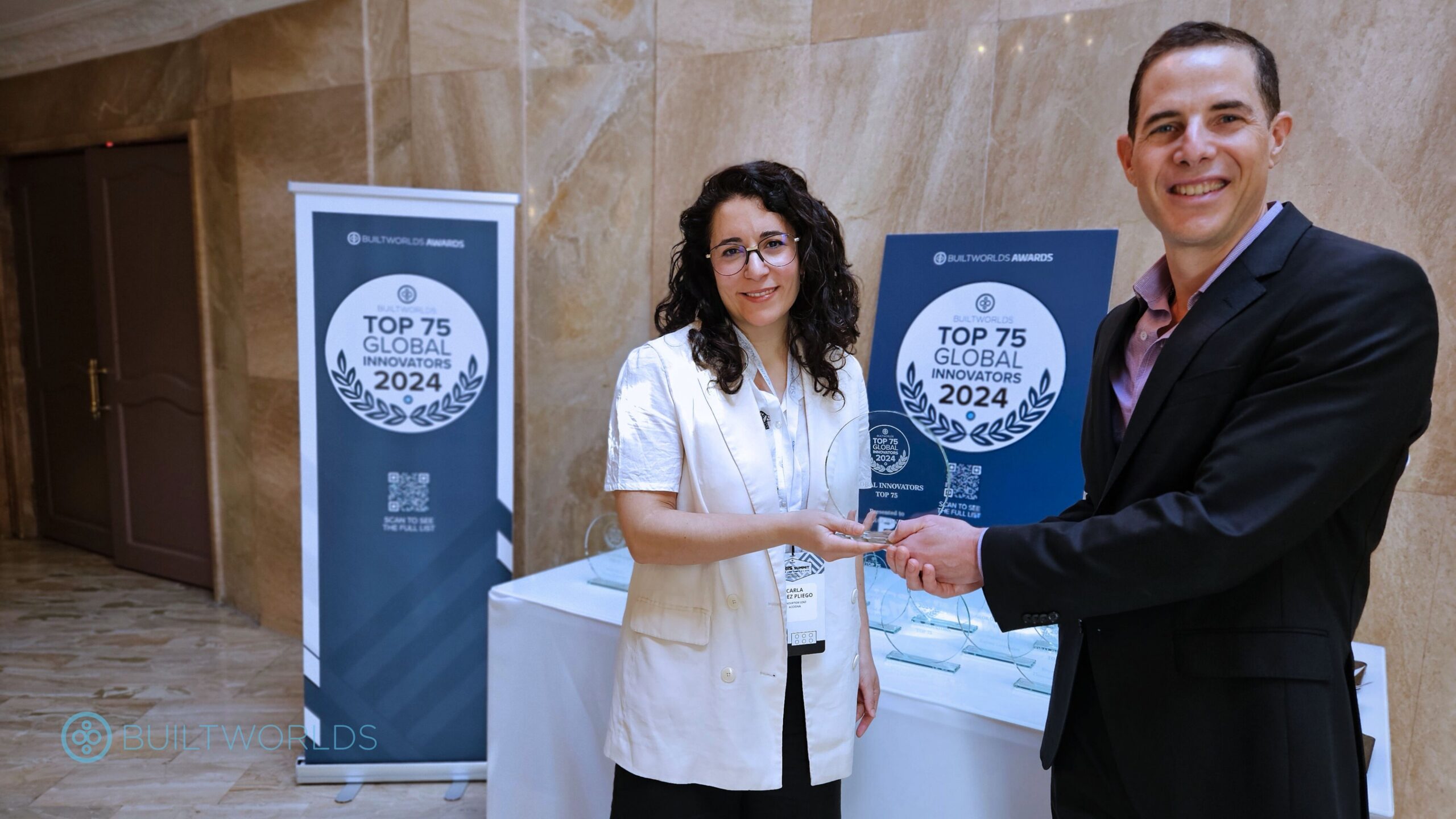
 Clara López Pliego is proof that there is no singular path of education or experience for open innovation leaders in construction, and that communications is more than a one-discipline profession.
After completing an undergraduate degree in public relations and advertising, as well as a Master’s degree in account management, Pliego had a revelation that set the last ten years of her career in motion.
“I quickly realized that my interest lay less in traditional communications and more in building connections between people, ideas and organizations,” Pliego told us in an exclusive one-on-one interview.
She spent five years at a consulting firm working with large Spanish corporations and public institutions to design collaboration models between startups, entrepreneurs, research centers, and other innovation stakeholders.
“(I learned) how to create structured pathways that help expert teams achieve ambitious goals while fostering collaboration and knowledge sharing, (as well as) the ability to identify small changes that generate significant impact and to understand innovation from both a strategic and operational perspective.”
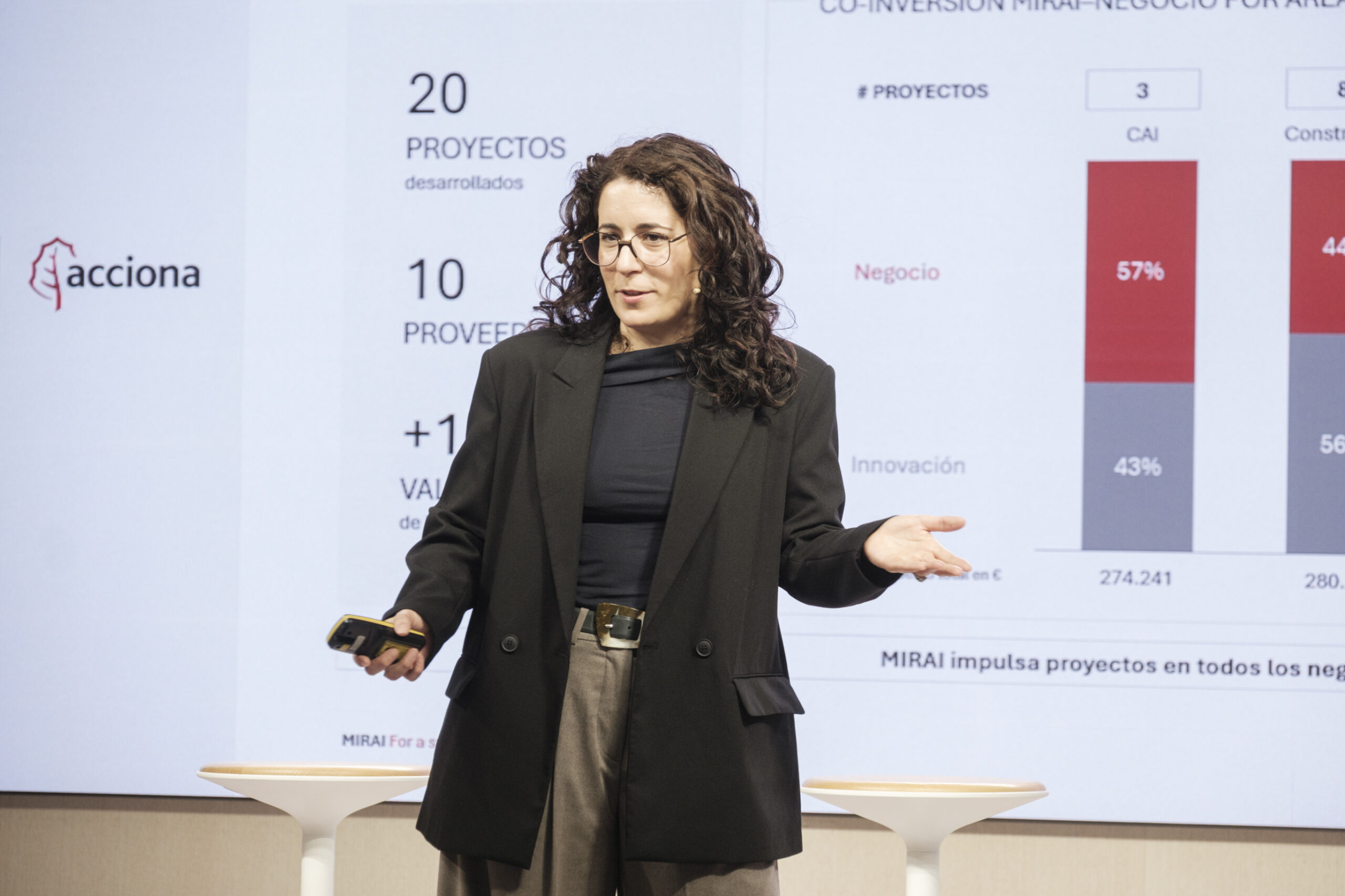
These skills are just some of the expertise she’s brought to ACCIONA as open innovation programs manager. We had the opportunity to sit down with Pliego and pick her brain about the pros and cons of open innovation, strategies for partnership, and how AI is impacting the AEC open innovation landscape.
What is your day-to-day like as ACCIONA’s Open Innovation Programs Manager?
I joined ACCIONA five years ago as part of the Open Innovation team, where I initially focused on pilot development programs and intrapreneurship initiatives. Now, I coordinate the open innovation programs for ACCIONA’s infrastructure division, which means managing timelines, resources, stakeholders and operational activities to ensure that programs are launched successfully and deliver value for the business.
In many ways, innovation management is about balancing the immediate needs of the organization with the opportunity to shape its future. It allows us to dedicate time not only to who we are today, but also to who we want to become.
What are some longer-term goals or initiatives that you are working towards in this role?
From a longer-term perspective, we are working on strengthening our positioning and narrative around open innovation, both internally and externally. We are also exploring how to digitalize and scale our function by transforming the information and insights generated by our business units into actionable intelligence that can support better decision-making and innovation outcomes.
What are the pros and cons of open innovation in our industry?
The advantages are significant.
In our industry, even small improvements can have a substantial impact, whether environmental, operational or economic. Open innovation allows us to identify and test solutions that have already proven successful in other sectors and adapt them to the specific challenges of infrastructure, construction, water and energy. Every year we collaborate with startups and technology providers that bring fresh perspectives and capabilities that would be difficult to develop internally at the same pace.
The main challenge is the complexity of our operating environment. Construction projects are highly demanding in terms of schedule, safety and operational requirements, which can make it difficult to test new solutions in active worksites. As a result, many pilots are initially carried out in operation and maintenance environments, where technical feasibility can be assessed with lower operational risk.
Can you describe ACCIONA’s strategy for open innovation? How do you balance these collaborations to make sure both parties are getting something meaningful out of them?
Our philosophy is simple: ACCIONA gains access to innovative solutions, while startups gain the opportunity to validate their technology in real-world infrastructure environments.
The startup contributes its technology, expertise and entrepreneurial mindset. ACCIONA contributes industry knowledge, technical experts, access to facilities and infrastructure, historical data, operational resources and financial support of up to €50,000 for pilot development.
We do not see startups as suppliers; we see them as innovation partners. The most successful collaborations are those where both parties clearly understand the value they bring and work together towards a shared objective.
Can you give an example of a time where open innovation resulted in a significant benefit for ACCIONA?
One example comes from a previous edition of I’MNOVATION, where ACCIONA’s water business collaborated with a startup developing a water footprint measurement solution designed to monitor water consumption and usage across industrial operations.
The pilot proved successful and evolved into a broader collaboration between the startup and ACCIONA, resulting in the creation of Live Water Footprint. This new digital solution combines the capabilities of both organizations to help companies measure, certify and improve their water consumption practices, ultimately contributing to more sustainable water management.
What are the ideal characteristics of an open innovation partner?
The most important characteristic is a genuine willingness to collaborate and co-develop solutions. Our ideal partner is not simply looking to sell a product; they are interested in validating its technical and economic viability while working closely with us to solve real industry challenges.
Beyond individual pilot projects, our goal is to establish long-term collaborations that allow successful solutions to scale across our businesses and create meaningful impact for infrastructure and the people who build, operate and use it.
Based on the nature of open innovation, do construction firms need to be a particular size in order to be meaningful collaborators or partners?
I do not believe company size is the determining factor. What matters more is the organization’s expertise, track record and the quality of the people involved.
Successful innovation partnerships require a clear understanding of the challenge being addressed, the objectives of the pilot, and the expected outcomes if the solution proves successful.
It is important not to pursue innovation purely out of curiosity. Innovation requires commitment, resources and a clear vision of the value being created. The journey can be demanding, and meaningful results are rarely achieved through good intentions alone.
How is AI impacting open innovation in the industry and what trends are you currently keeping an eye on?
AI is having a significant impact on open innovation because it is changing not only the solutions we look for, but also the way organizations collaborate, share knowledge and create value
together.
Traditionally, open innovation focused on identifying technologies capable of solving a specific challenge. Today, AI enables us to process, connect and interpret information at a scale that was previously impossible. It helps us identify opportunities faster, understand emerging trends and make better use of the knowledge generated across business units, projects and external partners.
One of the trends I find particularly interesting is the shift from isolated digital tools to connected innovation ecosystems. In the future, competitive advantage will not come from having access to more data, but from being able to transform that data into actionable intelligence and share it effectively across organizations.
At ACCIONA, we are currently implementing AI capabilities within our startup management platform to improve how we organize, connect and leverage information across our innovation ecosystem, matching technologies and startups more efficiently with business challenges. I am also closely following developments in predictive maintenance, computer vision and generative AI. These technologies are already improving operational efficiency, quality control and decision-making across infrastructure projects.
However, I believe the most important trend is not technological. It is the growing need to combine human expertise with artificial intelligence. The organizations that succeed will not necessarily be those with the most advanced tools, but those that are able to integrate technology, knowledge, and collaboration into the way they innovate and operate.


Discussion
Be the first to leave a comment.
You must be a member of the BuiltWorlds community to join the discussion.