

Following a bachelor’s degree in law in Korea and a Juris Doctor (JD) degree in the U.S., Hojung Jun, partner at Tokyo International Law Office (TKI), has cultivated a career path, as she puts it, “shaped by a strong interest in cross-border matters.” The experience has provided her a unique perspective on risk in our industry.
Out of law school, Hojung worked at one of the largest EPC contractors in Korea as in-house counsel covering cross-border mining, infrastructure and energy transactions. There, she gained a practical understanding of how contracts, negotiations, and risk management play out across jurisdictions. In 2014, Hojung moved to Japan and transitioned to international law firms, where she continued to focus on construction with a wider range of clients.
“I became deeply engaged with the Japanese market and realized that, due to recent macroeconomic and geopolitical changes, market participants in Japan … increasingly need legal advisors who can provide both close support and commercially viable advice,” she explained.
Ultimately, these experiences led Hojung to her current position at Tokyo International Law Office, where she has been able to “combine legal expertise with practical, business-oriented advice.” And just this year, Hojung began teaching as an adjunct professor and lecturer at Temple University and Keio University in Tokyo.
We’ll be hearing from Hojung at the upcoming Tokyo Global Summit as part of a breakout session titled “Mitigating Risk & Navigating International Contracts.” The session will focus on how risk is allocated and managed among stakeholders of cross-border projects in the energy, infrastructure, and mining sectors. In preparation for the Global Summit, we took the opportunity to pick her brain about recommended strategies and common pitfalls for companies looking to manage risk on international projects.
Tell us a little about your role and current projects at TKI.
At TKI, I focus on energy, infrastructure, and construction matters, mostly cross-border but also inbound investment into Japan. My work covers the full project lifecycle, from structuring and negotiating contracts to handling claims and disputes.
I’m currently advising on both inbound and outbound renewable energy projects (such as offshore wind, onshore wind, and battery energy storage systems) as well as infrastructure projects (including ports, mining, and desalination facilities). These deals involve construction, procurement and supply, project development, restructuring, and M&A. The jurisdictions I am active in span Africa, the Americas, and Asia Pacific, often in close collaboration with our Singapore office.
Are there any standard strategies for guiding clients through international negotiations?
Every deal is unique, but there are a few core principles I rely on:
- Preparation is key (although often forgotten): Take the time to discuss priorities and constraints with the client team, and understand the counterparties and their positions.
- Clarity and simplicity: Contracts must be clear and adaptable to avoid ambiguity across languages and legal systems.
- Managing leverage: Timing, background, and the history of the deal often matter as much as legal rights.
- Focus on solutions: In international deals, it’s essential to balance legal precision with commercial flexibility.
- Build relationships: Understanding the people across the table is often as important as (or even more important than) the legal documents.
How much do cultural differences impact collaboration on international projects, and how do you prepare yourself and your clients for that?
Early in my career, I underestimated the importance of cultural understanding, even though I had exposure to multiple cultures—Korea, the US, Japan, and Singapore. But after returning from Singapore in 2024 and taking on more leadership roles, I realized how deeply cultural differences affect communication, negotiation styles, and decision-making.
For instance, some cultures, like Japan, value consensus-building, while others, particularly in Western countries, often prioritize speed and directness. At the same time, it’s important not to stereotype since individuals differ even within the same culture.
I make it a point to research the business culture of each counterpart and their individual backgrounds, and I prepare my clients accordingly. Anticipating cultural dynamics is just as important as understanding the law, since it helps avoid misunderstandings and build trust.
What are some of the common risks on international negotiations and projects that you advise your clients on, and are there any standard practices or strategies you recommend?
International projects bring a wide range of risks. Misunderstandings are common, particularly when parties have different levels of familiarity with frameworks like FIDIC (or AIA for Americans), or when key concepts such as “good faith” (not automatically incorporated in common law) or “agree to agree” (unenforceable under English law but used daily in Japan) are used differently across systems.
Other risks include:
- Shifting political or uncertain/complicated regulatory environments, especially in the energy sector with (relatively) new technologies.
- Poorly drafted dispute resolution clauses, often finalized at the very end when parties are rushed and eager to just sign.
- Performance challenges, particularly in global supply chains and with counterparties’ credibility.
- Payment and currency risks, including exchange rate exposure and reliability of payment flows.
To manage these risks, I emphasize clear contracts and thorough risk allocation across the entire project. For project owners and contractors, this means looking beyond development or construction contracts to also consider underlying financing arrangements, power purchase agreements for energy projects, concession agreements for infrastructure projects, and operation and maintenance.
Equally important are well-structured dispute resolution mechanisms, with arbitration increasingly preferred in Asia, and trusted local partnerships to navigate on-the-ground challenges.
Finally, ongoing contract and relationship management is essential; it is never enough to simply sign a contract and leave it in the drawer. A common misconception in my industry is that a contract will “look after itself” once executed. In reality and especially in construction, active management and record-keeping are essential to prevent small issues from becoming major disputes.
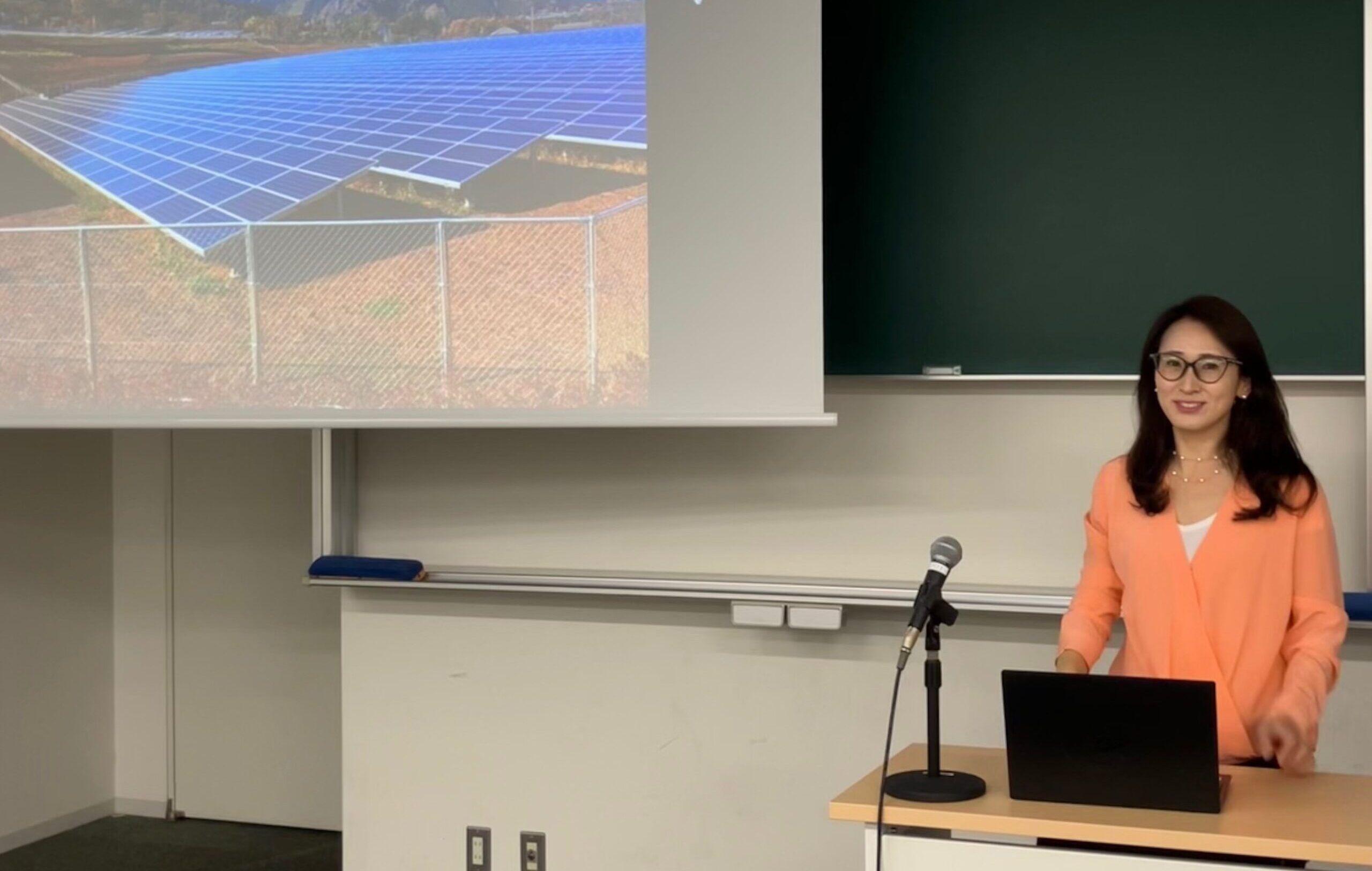
Has teaching given you any new insights to your own practice?
Absolutely. Teaching cross-cultural negotiation and energy law to U.S. law students and international lawyers qualified in their own jurisdictions forces me to explain complex concepts simply and clearly, often with examples and comparisons to their legal systems. It also keeps me sharp and continually exposes me to diverse perspectives.
With a mix of students and working professionals from different regions, their fresh perspectives and questions often mirror real-world challenges in unexpected ways, providing valuable insights into how the next generation of lawyers and clients think.
What is your advice for companies looking to expand their business globally or partner globally?
From my experience, a few things stand out. First, it’s essential to do your homework—understand the market, the legal environment, and the cultural context. Second, surround yourself with trusted advisors, especially strong industry and local experts who can help you bridge the gap between your experience and knowledge in your jurisdiction and the realities on the ground.
Flexibility and patience are equally critical. International deals almost always involve unexpected factors, especially in developing countries. In the energy and infrastructure sectors, for example, I worked on projects in 2015 that went dormant for years and resurfaced in 2025. It can be frustrating, but if a project is financially viable, patience often pays off.
What should companies new to international deals pay attention to when it comes to risk management?
I would emphasize the fundamentals: clear contracts, realistic timelines, thorough risk allocation, and proper dispute planning. It is also important to know your “must-haves” versus your “nice-to-haves.” And again, patience and flexibility are key — things rarely move at the pace you expect.
What should companies look for in international lawyers and partners?
In my view, the most effective advisors combine legal knowledge and sector-specific experience with cross-cultural understanding. A strong international lawyer is not just a legal expert but also a translator between law and business culture. They are pragmatic, commercially minded, and able to collaborate with local counsel and various stakeholders. It is also worth remembering that “international standards” are not always the standard in every jurisdiction. Having someone who can bridge international norms with local practice helps avoid misunderstandings and unnecessary roadblocks.

Discussion
Be the first to leave a comment.
You must be a member of the BuiltWorlds community to join the discussion.