
When leaders from across the AECO ecosystem gather in Tokyo this fall for the BuiltWorlds Tokyo Global Summit, they won’t just be discussing the future of the built world in meeting rooms. Beyond the panels, demo competitions, and networking, attendees will gain access to some of Japan’s most ambitious infrastructure projects and cutting-edge innovation centers; exclusive site visits that offer a rare firsthand look at the technologies reshaping cities, mobility, and the built environment.
James Harvey, co-head of the CBRE Idea Lab underscores the global relevance: “Japan’s construction and real estate sectors have been rapidly evolving over the past decade due to the nation’s aging demographics; and this is driving the development of several influential technologies.”
As Japan invests heavily in resilient infrastructure, smart city initiatives, and advanced engineering solutions, the Tokyo Global Summit offers a unique lens into how these efforts are unfolding in real-world applications. From one of the world’s largest tunneling projects to futuristic research hubs, here’s a preview of this year’s featured visits.
Kamariya Shodo Tunnel Site

Few projects capture the scale of Japan’s commitment to subterranean engineering like the Kamariya Shodo Tunnel. As one of the largest and most advanced tunnel sites in the world, the project is a centerpiece of Japan’s infra
structure expansion, addressing urban mobility, seismic reliance, and efficient land use in densely populated areas.
The Kamariya Shodo Tunnel is a record-setting urban tunnel project: it features a junction section with four mainline and ramp tunnels joining, creating an extra-large tunnel with a width of 29.5 meters and a cross-sectional area of 485 m² that can accommodate up to five lanes—excavated using the mountain tunneling method. These dimensions make it one of the largest urban mountain tunnel cross-sections ever constructed by NATM (New Austrian Tunneling Method).
Kajima Technical Research Institute
If the Kamariya Shodo tunnel showcases engineering on a monumental scale, the Kajima Technical Research Institute (KaTRI) demonstrates how innovation fuels those breakthroughs. Founded in 1949, KaTRI is the largest R&D facility owned by a single construction company, serving as the innovation brain of Kajima Corporation.
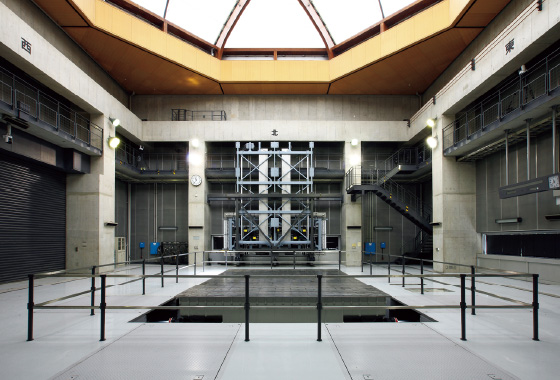
The institute’s research spans advanced concrete systems, robotics and automation, earthquake-resistant structures, and carbon-neutral construction materials. Recent focus areas include infrastructure climate resilience
and AI-driven project optimization, underscoring the global push toward more sustainable and data-driven building solutions.
Visiting KaTRI provides Summit attendees a rare opportunity to see the intersection of academic theory, corporate investment, and a real-world application. For leaders seeking to understand where construction technology is headed, this is where the future is being tested today.
CBRE Idea Lab
Before diving into strategic roundtable discussions, attendees will experience the CBRE Idea Lab, a collaborative innovation hub that blends workplace design experimentation with technology-driven solutions. Located in CBRE’s offices, the Idea Lab demonstrates how flexible environments and digital tools are reshaping the way global firms think about workspace strategy.
“What we’re most excited to showcase is not any of the emerging technologies we’re testing or working with, but CBRE Idea Lab’s role as a north star that ‘connects the dots’ between the real estate, construction, finance, and technology industries.”
-James Harvey, co-head of the CBRE Idea Lab
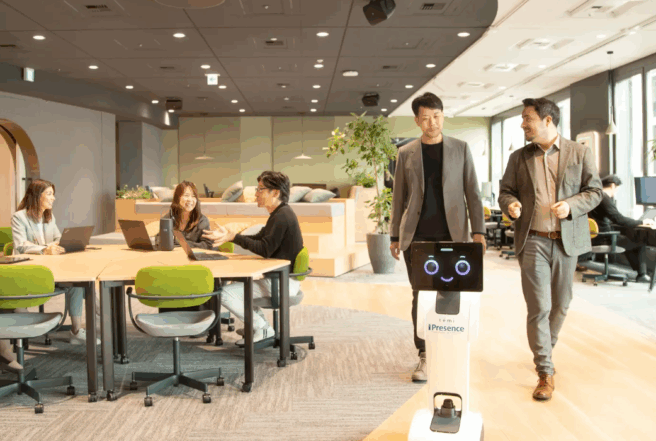
Among its showcase features are immersive digital collaboration platforms, modular workspace configurations, and data-integrated facilities management. As the workplace continues to evolve post-pandemic, the Idea Lab underscores how the built environment can support productivity, adaptability, and employee experience; critical considerations for AECO leaders shaping the next generation of office and mixed-use spaces.
According to Harvey, this kind of collaboration “is pivotal for (CBRE’s) continued growth as (the organization has) a dedicated space for learning, sharing new ideas and best practices, and collectively preparing for the multiple paradigm shifts that will fundamentally change how (CBRE and its clients will) build, occupy, and operate buildings.”
Harvey hopes that attendees “take away a clear understanding that the most powerful innovations come from this kind of collaborative environment, where people from different fields come together to test ideas and solve shared challenges.”
Haneda Innovation City

The Tokyo Global Summit tour concludes at Haneda Innovation City (HIC) , a large-scale development that blends business, culture, and technology into a single ecosystem. Built by Kajima as part of its Smart Future Vision initiative, HIC exemplifies Japan’s movement toward integrated smart city design.
The complex includes innovation centers, startup accelerators, and cultural venues — all aimed at fostering collaboration between corporations, entrepreneurs, and researchers. By incorporating sustainability features, digital infrastructure, and public engagement, community wellbeing in a rapidly changing world.
For attendees, HIC provides an inspiring final stop: a living example of how infrastructure, design, and innovation converge to shape the cities of tomorrow.
With a dynamic program spanning the full spectrum of architecture, engineering, and construction innovation, the BuiltWorlds 2025 Tokyo Global Summit is set to tackle the most critical issues facing urban development, infrastructure, and the future of cities in the Asia-Pacific region. By convening diverse voices from leading firms, government agencies, and technology pioneers, the summit provides an unparalleled forum for collaboration, learning, and forward-thinking solutions for global AECO stakeholders.
Harvey, who was an inaugural 2024 attendee, stresses how impactful the Tokyo Summit is as it has “become clear that the BuiltWorlds platform provides a greater sense of intimacy and connectivity that drives collaboration beyond this simple networking.” The Summit provides a stage for global minds to “pool expertise and capital, (so) nation states can build cities and infrastructure that are better equipped to handle climate change, urbanization, and technological shifts.”
Don’t miss the chance to be part of this international dialogue and experience Tokyo’s groundbreaking sites firsthand. Register to join the conversation. Attendees are eligible for discounted Digital Memberships that include two or four transferable tickets, which can be used at any BuiltWorlds event throughout the year.
Discussion
Be the first to leave a comment.
You must be a member of the BuiltWorlds community to join the discussion.