
 For nearly 20 years, Justin Schwaiger has helped AEC industry teams build both structures and solutions. In all that time—from his start as a structural engineer at Thornton Tomasetti to stints at Katerra, Manufacton by ALLPLAN, Kope, and even now in his role at DPR—he’s never wavered on the belief that scalable productization could revolutionize the industry.
It’s a belief that’s helped guide Schwaiger’s career, ultimately leading him to DPR Construction, where in 2025 he joined the company as its Prefabrication Technology Leader, heading national strategy for industrialized construction and prefabrication. Schwaiger will be joining BuiltWorlds at the upcoming Paris Global Summit to speak on the subject. However, in the lead up to the event, we had the opportunity to pick his brain about not just where scalable prefabrication is headed, but how data center construction specifically is impacting the sector’s future.
After 10 years as a structural engineer, what precipitated the switch to prefabrication and offsite construction?
During my time with Thornton Tomasetti, where I designed high rise towers all over the West Coast of the US and then Asia, I realized we were solving and re-solving similar problems—coordination issues, systems integration issues, and more—from project to project. These issues kept us at status quo in terms of level of design.
At the same time, I saw that designers, engineers and architects wanted to craft designs that were more refined than what is possible in traditional real estate deliveries. There was a disconnect between the quality of design we wanted to do and the quality of design we were able to deliver. The concept of productization, industrialization, and offsite production seemed really prescient. I saw the pros of (offsite), which include lots of control over supply chains and the design. Using these methods, we could still have high quality designs but in a more systematic and repeatable way, achieving economies of scale.
The other aspect of (switching to offsite) was seeing the emergence of generative design technologies in architecture and engineering. In the early days of machine learning, technology really started to influence all aspects of the construction lifecycle, starting with project management and 3D modeling tools and moving on from there.
All of these things precipitated my move into offsite construction, because I saw it as a way of solving all of these problems: higher quality designs, repeatability and reusability, configurability baked in with technology.
Can you tell us a little more about your current role as Prefabrication Technology Leader at DPR Construction?
I look at the prefabrication technology stack that runs the prefab business from design automation through factory production, all the way to install, as well as all the systems connected to that ecosystem. Essentially, I’m building out a tech stack that is completely new, because this hasn’t really been done at scale before. There’s a real opportunity to do prefab at scale, given how innovative DPR is as a company.
What does building out a prefabrication tech stack look like?
DPR has always had a technology-forward mindset, which is one of the reasons I’m here. The real problem that I’m looking to solve is that we don’t have an off-the-shelf platform that can manage and run a prefabrication business from design configuration through factory production.
We pull some tools from the manufacturing world and others from construction. Then, there are other tools that we have to purpose-build. My challenge is trying to bridge the gap between manufacturing technologies and construction technologies. The path forward, so far, is to take the best available from each of those worlds and then fill in the gaps where technology doesn’t exist yet.
We had the opportunity to speak with you in 2022, where you said that modular construction startups were not competing with each other so much as they were competing with the “inertia of the industry” and traditional construction methods. Is that still true?
Yeah, 100% that’s still true.
The rate of adoption for offsite construction and prefabrication is relatively low compared to traditionally built or traditionally placed construction projects and job sites. Any incremental gain in terms of prefab adoption is a win for everybody across the industry. If we can get prefab adoption rates to 50-75% of project value delivered, that will be a different story.
But, at this point, it’s more of a mindset shift for owners, architects, and all other participants in the building ecosystem to adopt prefab and to get over some preconceived notions—particularly in the world of modular construction, which is what my comments from 2022 are addressing specifically. There’s still a lingering perception challenge tied to older mobile modular housing models, even though current non-relocatable modular structures are built today to traditional building codes.
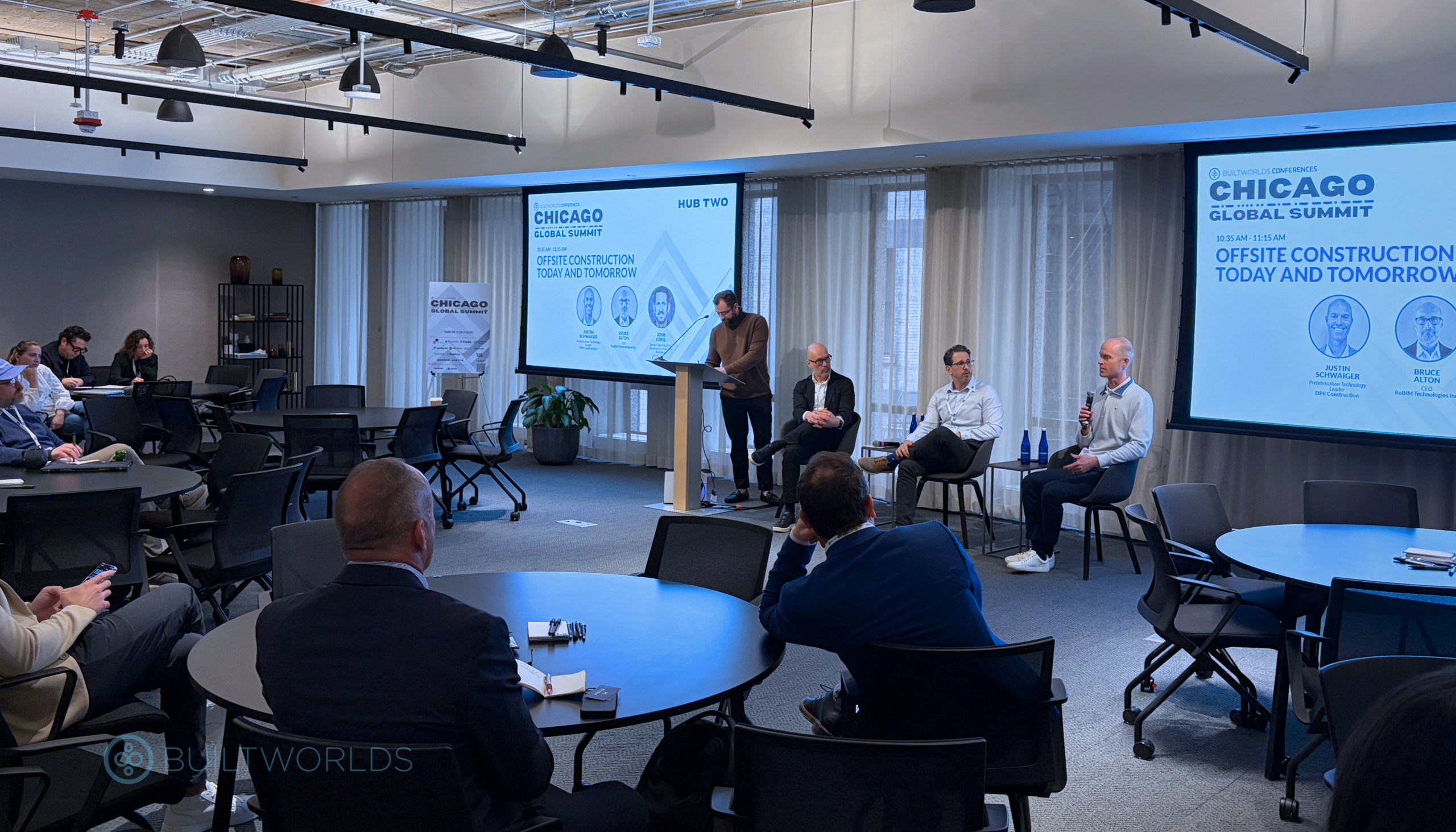
Where do you see the sector heading in the next five years to better compete with traditional construction and will data centers play a big role?
That’s a great question. There’s a real opportunity right now because of data centers. These projects are being invested in at a scale in which we haven’t seen in a very long time, if ever. We’re expected to spend more on AI infrastructure in 2026 than we did on the interstate highway program over the course of 30-40 years.
These projects are typically built by owners that see the value of productization. They’ve got a real estate portfolio in mind. They want buildings that are similar because they are easier to design, reconfigure, and maintain. We’re also building in places where there’s connectivity to fiber and energy available, but not necessarily enough labor. So, for a bunch of reasons, offsite delivery methods are very often used on data center projects to speed up the schedule and reduce labor requirements.
As an offsite construction industry, we’ve tried to drive and sell industrialized methods into projects for years. Right now, specifically with data centers, we’re seeing the market start to pull for those methods, as opposed to the industry pushing it. The real opportunity is to capitalize on this momentum and change how we build (beyond data centers), moving into a new way of delivering buildings that are designed better, produced to a higher quality, and finished faster.
I think that over the next five to 10 years, these data center projects will establish that “prefab first” mindset into companies like DPR and others that are building and designing data centers. The change in thinking will continue forward after the AI boom and AI infrastructure spending spree are done, however many years into the future that is.
You mentioned earlier that a pro of offsite construction is control of project supply chains. Since COVID and more recently the closing of the Strait of Hormuz, we’ve seen increasingly insecure supply chains across industries. How can prefabrication or offsite construction methods help contractors navigate supply chain disruptions and logistics?
There’s definitely been a lot of supply chain challenges since COVID up through today. Traditional delivery methods tend to push supply chain decisions down to subcontractors or trade contractors, who are choosing which supplier or product is actually selected.
I think there are a couple of shifts there where, overall, people are moving (decisions) up the value chain to try to grab more control of the supply chain and not leave it up to chance:
We’re seeing sophisticated owners and contractors do more procurement themselves and take ownership of supply chains. Particularly in the world of advanced technology, these owners are doing a lot of owner-procured components, including the chips and long lead-time items like switch gears. They have the potential for better buying power because they can aggregate all of their projects and buy these components in bulk.
We’re also seeing a shift toward a new node in the delivery ecosystem, where players who traditionally would be builders, like DPR Construction, are more of a supply chain integrator. They become a turnkey supplier to an owner, kind of like an Engineer, Procure, Construct (EPC)-type arrangement. An owner comes directly to a builder who then aggregates the supply chain, influences the design, and helps alleviate those schedule or supply chain concerns within projects in a more consolidated and comprehensive way.
We’re looking forward to hearing from you at the upcoming Paris Global Summit, where you’ll be speaking on a panel discussion titled “Scaling Industrialized & Modular Construction.” Can you give us a sneak peek at what you’ll be focusing on?
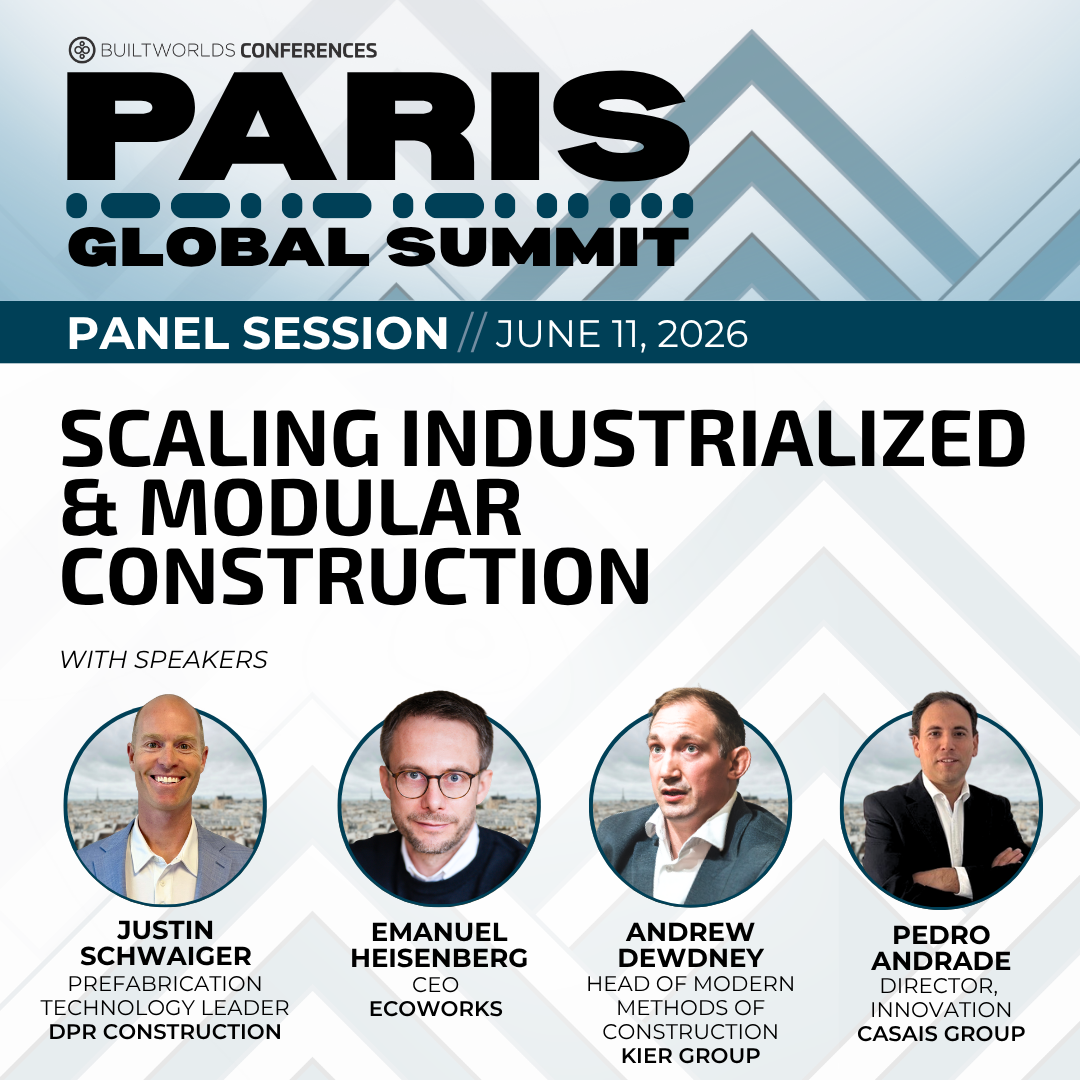 Yeah, I’ll be speaking on a lot of the topics we touched on today. There’s a real opportunity right now to build data centers and other large portfolios of infrastructure around computing capacity and energy delivery. These opportunities are crucial to build the change in the industry that so many people in offsite construction want to see. They’re also the key to improving how we build by improving our methodologies.
It’s going to be a great discussion between myself, Andrew (Dewdney) from Kier Construction, and then two prefab startups (Emanuel Heisenberg from ecoworks and Pedro Andrade from Blufab), so there’s going to be a good variety of perspectives included.


Discussion
Be the first to leave a comment.
You must be a member of the BuiltWorlds community to join the discussion.