
Back in April we shared five takeaways from the 2026 Chicago Global Summit, drawn from its breakout stages. This piece goes back to the main Forum stage, where two days of sessions kept coming back to one idea: the built world is past asking whether to adopt new technology. The harder question now is how to make it pay off, in the fab shop, on the rail corridor, in the design studio and at the exit. Here is what we heard, and what it sets up for the 2027 Chicago Global Summit, April 28–29, 2027.
1. AI readiness comes before AI deployment
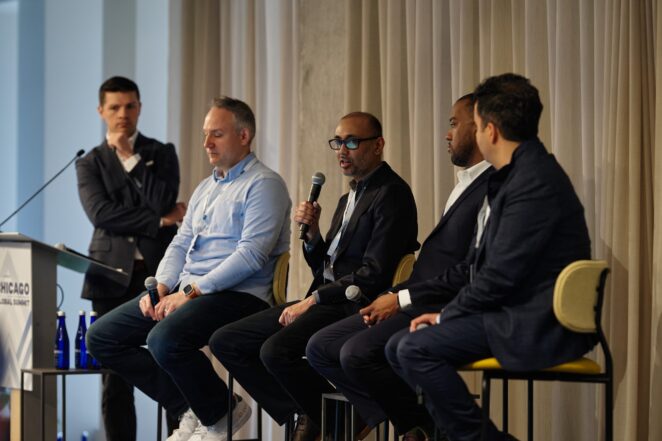
The summit opened with AI in Action: Practical Lessons and the Mid-Market Opportunity. Amr Raafat of Windover Construction showed how the Boston-based construction manager is putting technology to work on complex and modular projects, from AI-assisted code-compliance review to digital twins that carry construction data into operations. Tomislav Zigo of BEXEL USA followed with a blunt message for mid-market firms: assess your organization’s capacity for change and the state of your data before picking where to deploy AI. In the Q&A, the advice was to bring legal teams in early, because they can turn liability worries into backing for AI initiatives.
The next morning, AI Use Cases Industry Leaders Are Most Excited About picked up the same thread. Hrishi Maha (DPR Construction), Eveart Foster (Autodesk), Mark Cichy (HOK) and Mani Golparvar-Fard (Reconstruct and the University of Illinois) talked through information management, data classification and building a semantic layer across disconnected systems. They also discussed hybrid approaches that pair off-the-shelf models with in-house front ends to protect domain expertise, and asked what AI-driven efficiency will do to the hourly billing model. The consensus: start from a business problem, then build the data platform, then deploy the AI. Watch the session.
2. The fab shop is the next frontier
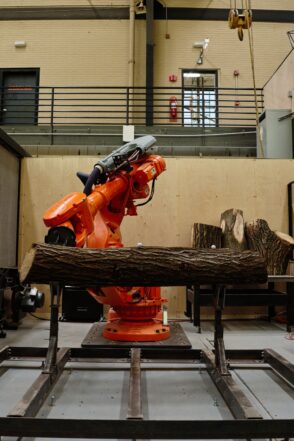
In Technology in the Shop: Fab Shops, Tools, and Equipment, Travis Voss (SMACNA), Steve Matson (Milwaukee Tool) and Burcin Kaplanoglu (SBK Technologies) asked why fabrication hasn’t reached manufacturing-style automation. Their answers: construction is more dynamic than a factory floor, the market is too fragmented for any one player to force standards, and tool makers have little incentive to make their platforms talk to each other. Their prescriptions were practical. Map your processes before buying anything. Measure ROI in schedule, QA/QC and labor, not just a single financial number. And let the people who use the tools help choose them.
3. Infrastructure needs new delivery models
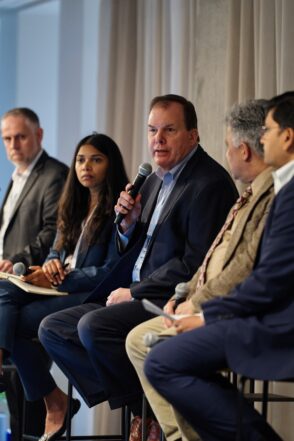
The Future of Infrastructure panel brought together Amit Bose, former Administrator of the Federal Railroad Administration, Tariq Masud (Parsons), Mariah Ray (Glydways) and Ted Coffey (STV). They made the case for moving beyond design-bid-build, pointing to partnerships between startups and established engineering and construction firms on smaller P3 projects. They highlighted agency innovation programs that let transit operators test new technology outside traditional procurement, and state-led investment in passenger rail. They also looked at where data, sensors and AI can ease long-standing rail challenges, from project sequencing to maintenance staffing to supply chain bottlenecks.
4. Design technology’s bottleneck is data, not tools
In The Future of Architecture & Design Technologies, moderator David Gerber (USC) led Alex Serriere (TEECOM), Stuti Bhardwaj (Gensler), Zhexiong Chai (HKS Architects) and Jordana de Castro Rosa (WSP) through the realities of AI inside large design firms. Risk policies limit what teams can use, BIM models often carry poorly standardized data, and version control remains a pain point. Their answer was technology that normalizes how different teams work, with human checks, rather than ever-stricter modeling rules. One example: automating early design steps cut pre-design time dramatically. Watch the session.
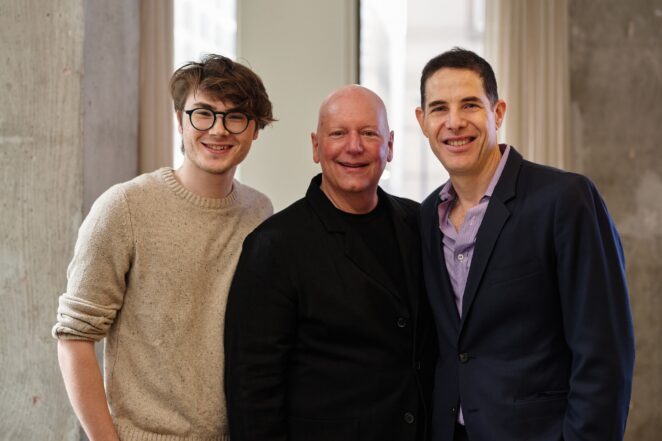
Day 2 opened with a broader view of design. Dirk Denison and Jayhawk Reese-Julien of the Mies Crown Hall Americas Prize (MCHAP) at Illinois Institute of Technology explained how the prize narrows roughly 300 nominated projects across the Americas to a shortlist that juries visit in person. They described what the winners share: architectural generosity toward their communities, adaptive reuse of existing structures, and doing more with less across very different climates and economies.
5. Built world capital has grown up, and exits are real
From Seed Investors to Sovereigns traced how funding for built world technology has grown from niche seed rounds into a market that now includes corporate venture arms, infrastructure funds and sovereign wealth. Alice Leung (Brick & Mortar Ventures), Lucas Pasch (Heartland Ventures) and Jason Blumberg (Earth Foundry) urged founders to diligence their investors as carefully as investors diligence them, because sector expertise and go-to-market help matter more than check size.
The summit closed with a story that showed how this ecosystem can pay off. In From Networking to Acquisition: The Document Crunch Success Story, founder Josh Levy was joined by Vivin Hegde (Zacua Ventures), Jenny Song (Navitas Capital) and James Park (Trimble). They retraced how relationships that started at BuiltWorlds events grew into investment and, ultimately, Trimble’s acquisition of Document Crunch. Watch the session. Earlier in the afternoon, Mota-Engil Chief Innovation Officer Rui Coutinho introduced the Center for Future Worlds in Porto, Portugal. It is a new hub for companies, startups, universities and NGOs to work together on the sector’s systemic challenges, from safety to decarbonization.
6. Demo Day: Sandbox Carbon takes the top prize
Seven early-stage startups pitched at the Early Stage Demo Day: Armeta, Crewscope, Jobotics AI, Modelizer.ai, Sandbox Carbon, Structo and Structured AI. Judges came from GroundBreak, Iron Prairie, Kajima, Moderne, SNAK, UFP, Zacua and Amrize. Sandbox Carbon, a Chicago hard-tech company, won. In the Growth Stage Technology Showcase, Engineered Vibration Solutions (CALMFLOOR), SmartPM Technologies and Yourco presented companies already scaling with contractors and owners.
Join us in 2027
The 2027 Chicago Global Summit returns April 28–29, 2027. Expect more on AI readiness, fabrication, infrastructure delivery and the capital behind it all, plus a new class of Demo Day startups. Learn more and register. Want to speak, pitch at Demo Day or sponsor? Get in touch.



































Discussion
Be the first to leave a comment.
You must be a member of the BuiltWorlds community to join the discussion.